
Criminal Court Records in Lee County
A criminal court record is the case file the clerk opens the moment charges are filed against a defendant. In Lee County, felony cases are Circuit Court records, and the Lee County Circuit Clerk keeps the general court docket where the names of all parties, the plea, the indictment, the court's orders, and a full record of proceedings are entered. That docket is the spine of the file. Everything that happens after charging, from arraignment to the final sentence, is written into it. The file is a case-level record, not a single page, so it grows as the case moves and closes only when the court enters a disposition.
Several courts produce criminal records in the county. Circuit Court is the trial court of general jurisdiction and tries felonies, treason, and serious crimes. County Court, Justice Court, and Tupelo Municipal Court share misdemeanor jurisdiction, and County Court also hears criminal appeals from Justice and Municipal courts. The charges that open a file are detailed on the Lee County arrest records and court charges page, while the criminal case file is one part of the broader set of Lee County court records. A few legal terms recur across every criminal file.
- Indictment
- A grand jury's formal charging document for a felony.
- Information
- A prosecutor's charging document used in some criminal cases without a grand jury.
- Arraignment
- The first formal appearance where the defendant hears the charges and enters a plea.
- Plea
- The defendant's formal answer to a charge, such as guilty, not guilty, or no contest.
- Disposition
- The final outcome of a charge or the whole case.
- Capias
- A warrant-like court command, often issued after a failure to appear.
How to Search Lee County Criminal Court Records
There is no single free countywide portal that returns every Lee County criminal case. The search has to be matched to the court level. Felony and other Circuit Court matters, along with County and Youth Court records, start with the Circuit Clerk at 200 W. Jefferson St. in Tupelo. The clerk's main line is (662) 432-2300, and the Circuit Court department can be reached at 662-432-2320. Misdemeanor citations filed in the city run through the Tupelo Municipal Court payment portal, and Justice Court traffic and misdemeanor matters route through that court at 662-432-2500.
- Decide the court level from the charge. Felonies are Circuit Court cases; lower-level misdemeanors sit in County, Justice, or Tupelo Municipal Court.
- Contact the office that holds that court's file. For Circuit, County, and Youth matters, call or visit the Circuit Clerk.
- Provide the defendant name or the case number, and narrow by court and the rough date of filing.
- Review the docket entries for the plea, motions, hearing dates, and the disposition.
- Order a certified copy from the clerk when you need a court-accepted document rather than a quick look.
Statewide access runs through Mississippi Electronic Courts, the official e-filing and case-management system. Remote viewing of full case documents generally depends on PAMEC subscriber access rather than anonymous public search, and the First Circuit Court calendar is attorney-facing and requires a registered login. For most members of the public, the clerk's counter remains the dependable way to read a complete criminal file.
Who Prosecutes Lee County Criminal Cases
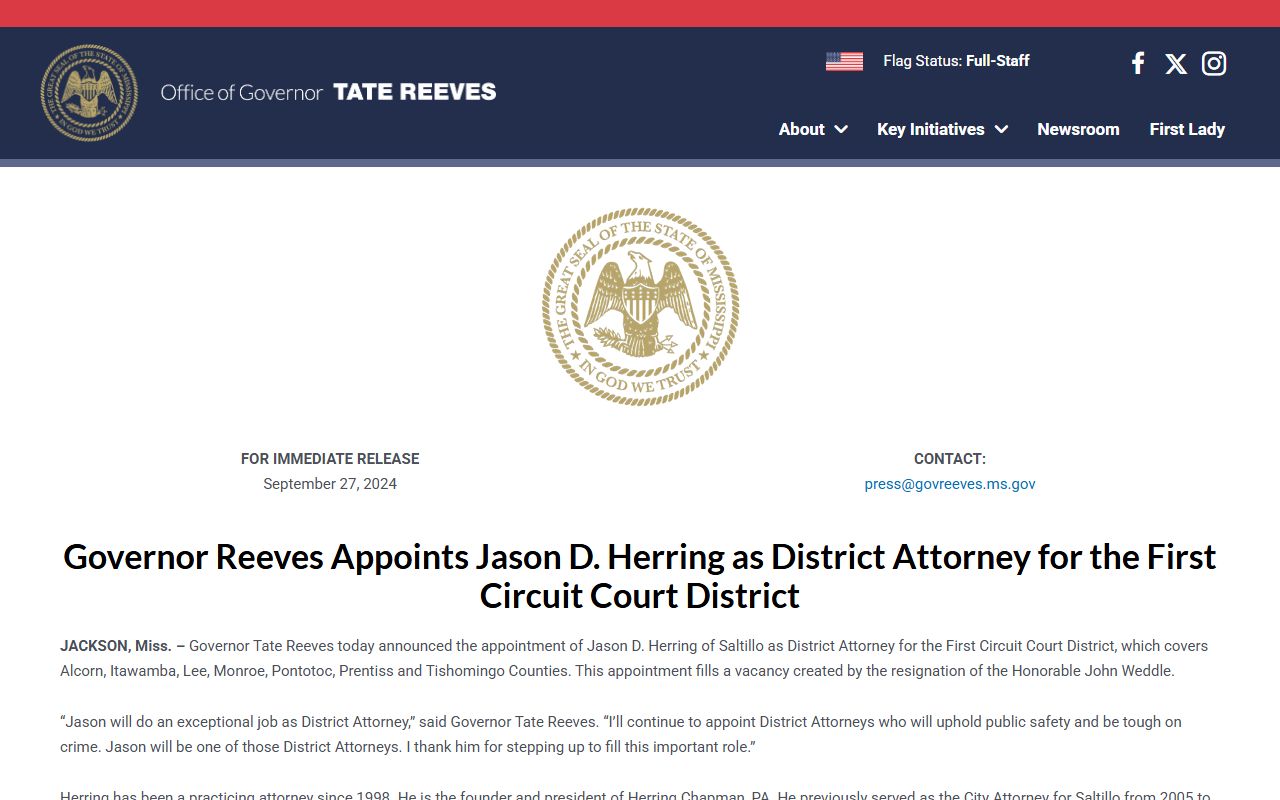
Felony charges in Lee County are prosecuted by the District Attorney for Mississippi's First Circuit Court District, which covers Alcorn, Itawamba, Lee, Monroe, Pontotoc, Prentiss, and Tishomingo counties. The current district attorney is Jason D. Herring of Saltillo. His appointment was announced in Governor Reeves' official statement naming Jason D. Herring as district attorney, filling the vacancy left by the prior district attorney's resignation.
The district attorney's Tupelo office decides which felony cases to charge, presents matters to the grand jury, and carries the prosecution through plea or trial. Misdemeanor prosecution is different and varies by court, with city and county attorneys handling lower-level cases in Municipal and Justice courts. The prosecutor's choices shape the file directly, because a charge that is amended, reduced, or dismissed shows up as an entry in the docket.
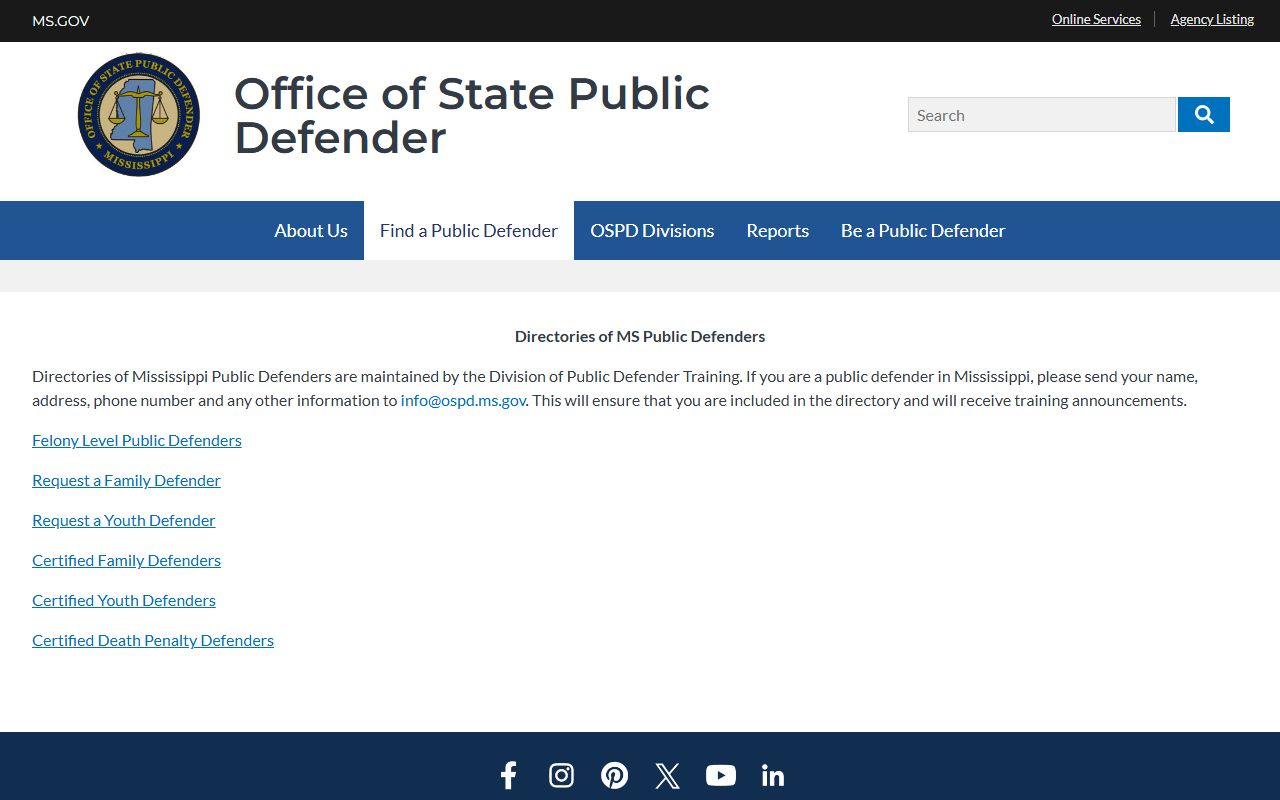
Defendants who cannot afford counsel may be appointed a public defender. The Mississippi Office of State Public Defender keeps the official rosters, and you can confirm who serves the county through the Mississippi public defender directory. The 2024 felony-level directory lists Lee County defenders including Lori Nail Basham, William C. Bristow, and Adam Pinkard.
Appointment of counsel is handled by the court, not by calling a defender directly. A person charged in Lee County should ask the clerk or the court how to request appointed counsel and should still appear on every scheduled date.
Stages of a Lee County Criminal Case
A criminal case moves through a set sequence, and each step leaves its own mark in the record. Reading the file in order makes it easy to see where a case stands and what is left to happen. The path is the same for most felonies, even when the timing stretches out over months.
Case flow: Charges Filed › Arraignment › Pretrial / Motions › Plea or Trial › Disposition › Sentencing
| Stage | What Happens |
|---|---|
| Arraignment | The defendant appears, hears the formal charges, and enters a plea. Bond and counsel are addressed here. |
| Pretrial / Motions | Lawyers file written requests, exchange evidence, and argue issues such as suppression. Hearings and continuances are logged. |
| Plea or Trial | The case ends in a negotiated plea or goes to a jury, which in Circuit Court needs a unanimous vote to convict. |
| Sentencing | After a guilty plea or verdict, the judge imposes the sentence, which may include jail, prison, probation, fines, and costs. |
What a Lee County Criminal Court Record Shows
The Circuit Clerk's own duty list gives the strongest picture of what a Lee County criminal file holds. The general court docket carries the names and parties in each case, the plea, the indictment, records from inferior courts on appeal, and other papers, while orders are kept in the minute book and a full record of proceedings is entered. Fine-payment instructions show that the offender name and case number are the practical identifiers used to find a file.
| Field | What It Shows |
|---|---|
| Case Number | The unique identifier for the file, required when paying or requesting records. |
| Defendant | The accused person, listed with the other parties in the general docket. |
| Charges | The offenses as filed, by indictment or information, including any later amendments. |
| Plea | The defendant's answer to each charge, entered at or after arraignment. |
| Disposition | The outcome of each charge, such as guilty, dismissed, or acquitted. |
| Sentence | The punishment imposed, with jail or prison time, probation, fines, and costs. |
Reading Dispositions and Sentences
The disposition is the line that tells you how a charge ended. Common entries include guilty, not guilty, dismissed, nolle prosequi when the prosecutor drops a charge, and no contest, where a defendant accepts the penalty without admitting the facts. A case with several charges can carry a different disposition for each one, so the file may show one charge dismissed and another resolved by a plea.
The sentence follows a conviction or a guilty plea and reads as a set of obligations. It can pair a term of incarceration with probation, fines, restitution, and court costs. Circuit Court fine payments by mail must include the offender name and case number, which is a sign that the financial part of a sentence is tracked inside the same file. A short note that a sentence is suspended or that probation was granted changes the practical effect of the punishment, so the full order matters more than the headline charge.
Charges vs. Convictions in Lee County
Being charged is not the same as being convicted. A criminal court record can show charges that were later dropped, dismissed, reduced, or that ended in acquittal, and those entries stay in the public file even when the case did not end in a finding of guilt. The difference comes down to the legal standard each step requires.
| Charge | Conviction | |
|---|---|---|
| Stage | Accusation | Verdict or plea |
| Burden of Proof | Probable cause | Beyond reasonable doubt |
| Decided By | Prosecutor or grand jury | Judge or jury |
| Public Record | Yes | Yes |
Lee County Adult Felony Intervention Court
Some felony defendants enter a problem-solving program instead of a standard prison track, and that path produces its own court record. The First Judicial District Adult Felony Intervention Court, also called Drug Court, serves all seven counties of the district, including Lee. The program is described on the First Circuit Adult Felony Intervention Court page, which lays out the treatment requirements and the structure participants follow.
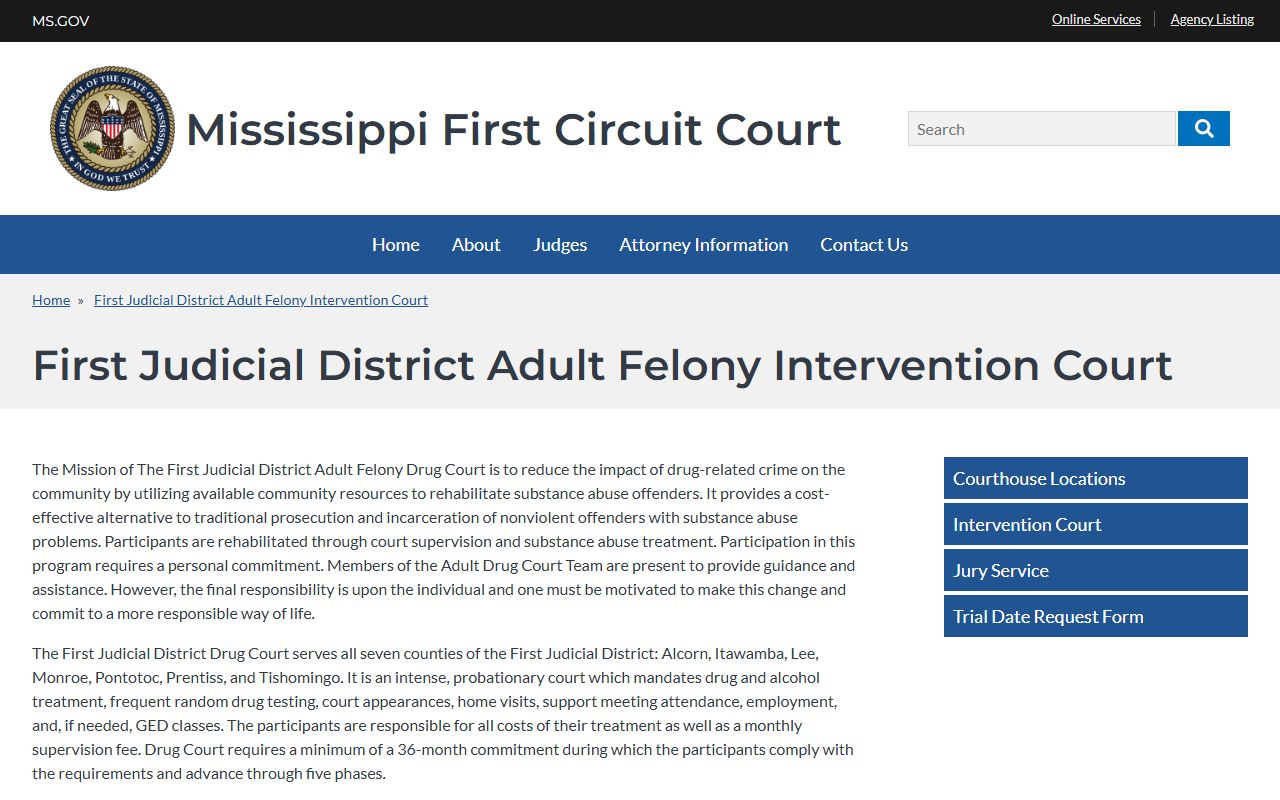
It is an intense probationary court that requires drug and alcohol treatment, frequent random testing, court appearances, home visits, support-meeting attendance, and employment. The minimum commitment is 36 months, and participants advance through five phases. After referral, staff conduct an interview, review prior history, and arrange a treatment assessment. Acceptance is a joint decision involving the defendant's attorney, the program staff, the district attorney, and law enforcement. The defendant then enters a plea to the pending felony or undergoes probation revocation before a Circuit Court judge before starting Phase I.
Sealed vs. Expunged Records
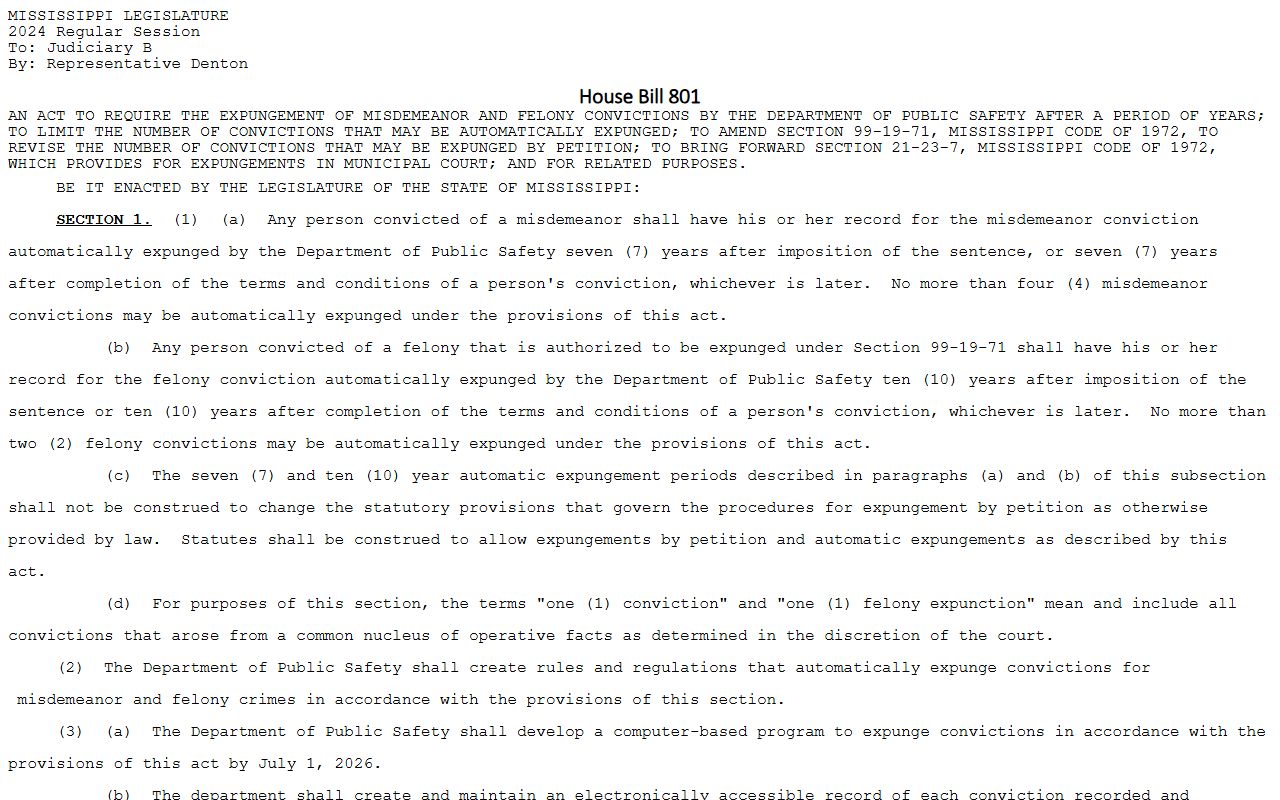
Two outcomes can pull a criminal record out of public view, and they are not the same thing. Sealing restricts public access without destroying the record, while expungement removes an eligible record so it is treated as if it never existed. Mississippi allows expungement by petition for certain misdemeanor and felony records, with eligibility tied to the offense, sentence completion, prior record, and waiting periods. The governing language appears in the Mississippi expunction statute, Miss. Code Section 99-19-71.
| Sealed | Expunged | |
|---|---|---|
| Visibility | Hidden from public | Destroyed or treated as never existed |
| Law Enforcement | Limited access | Very limited |
| Eligibility | Often youth, sensitive, or court-ordered matters | Eligible offenses under Section 99-19-71 with limits |
Expungement is a court process, not an automatic event, and it runs through the court where the case ended. The steps below outline the practical path for a Lee County record.
- Identify where the record ended: Justice, Tupelo Municipal, County, or Circuit Court.
- Get the case number and the disposition from the clerk that holds the file.
- Check eligibility under Mississippi law, since violent, sex, serious drug, DUI, weapons, and several other offenses are commonly excluded.
- Prepare and file a petition in the court of conviction, and expect the prosecutor and law-enforcement agencies to receive notice.
- If the judge grants the petition, obtain certified copies of the order.
- Confirm the clerk, sheriff, arresting agency, and state repositories receive the order so official records follow it.
Public Access to Lee County Criminal Records
Mississippi policy favors public inspection of government records, and criminal case files are generally open unless a specific statute, court rule, or court order restricts them. A record can be public and still require an in-person visit, a clerk copy fee, or redaction of sensitive identifiers. The framework that controls access and copying is set in state law, and the electronic system that hosts filings adds its own access rules.
Key Statutes:
Mississippi Code § 25-61-1 et seq. - The Public Records Act makes public records open to inspection unless another law makes a record exempt or confidential.
Mississippi Electronic Courts - Statewide electronic filing exists, but remote public viewing can be limited by MEC and PAMEC procedures and subscriber access.
Background Check Considerations
A casual lookup of a criminal file is not the same as a background check used for hiring or housing. Decisions that fall under the federal Fair Credit Reporting Act must come from a regulated consumer reporting agency that follows accuracy, notice, and dispute rules. Court records read directly from the clerk are useful for personal knowledge, but they are not a compliant employment or tenant screening on their own. For arrest and release copies, the Lee County Sheriff's records office handles those requests separately from the court file.
Important: This site is not a consumer reporting agency under the FCRA, and its information may not be used for credit, employment, tenant, or insurance decisions.
Restricted Criminal Court Records in Lee County
Not every criminal-adjacent record is open to a public search. Youth Court matters are the clearest example, because Lee County Court's Youth Court division handles children under 18 alleged to be in need of supervision, abused, neglected, or delinquent, and those files are confidential by statute. The Youth Court confidentiality language in Miss. Code Sections 43-21-251 and 43-21-261 keeps the records and their contents private except for authorized disclosures. A person seeking such a record should contact Youth Court, the attorney of record, or the proper agency rather than a public case search.
Other records carry their own limits. Sealed and expunged files drop out of public view by court order. Adoption records held in Chancery Court are sealed and require an attorney to access. Mental-health and commitment matters in Chancery Court are restricted because they contain health and personal information. Active or investigatory files may be withheld while a case is open, and even an open file can redact Social Security numbers, financial accounts, minor names, and addresses protected by order. When a record cannot be viewed, the path forward is the clerk, the court, or counsel rather than a public lookup.