
Lee County Arrest Records and Court Charges
A Lee County arrest record is the record of an arrest itself. It names the person taken into custody, the agency that made the arrest, and the booking that follows at the county detention center. Most arrests here run through the Lee County Sheriff's Office at 510 North Commerce Street in Tupelo. Booking captures a date and time, basic demographics, and the offense an officer lists at intake. An arrest record does not decide guilt. It marks only that a person was detained on a suspected offense while a case begins.
The court charge record is a separate file. After an arrest, a prosecutor reviews the case and decides the formal charges, which are then filed with the court clerk and tracked through the case. Felonies in Lee County are prosecuted by the District Attorney for the First Circuit Court District. Misdemeanor charges are handled by the court that holds the case. The booking and jail side lives on the Sheriff's roster, so the Lee County inmate records page covers the roster and the booking detail. The court charges after arrest, the pleas, and the outcome are kept in the case file, and the full file sits in the Lee County criminal court records.
How to Find Lee County Arrest Records and Charges
Lee County has no single free portal that searches every court at once. The search has to match the record to the office that holds it. Felony and larger criminal cases route to Circuit Court, and the Circuit Clerk keeps that docket at 200 West Jefferson Street in Tupelo. Misdemeanor and lower-level charges may sit with Justice Court or Tupelo Municipal Court. Booking and custody detail come from the Sheriff. The Sheriff's Office runs an inmate search page that links the public to the county detention center roster.
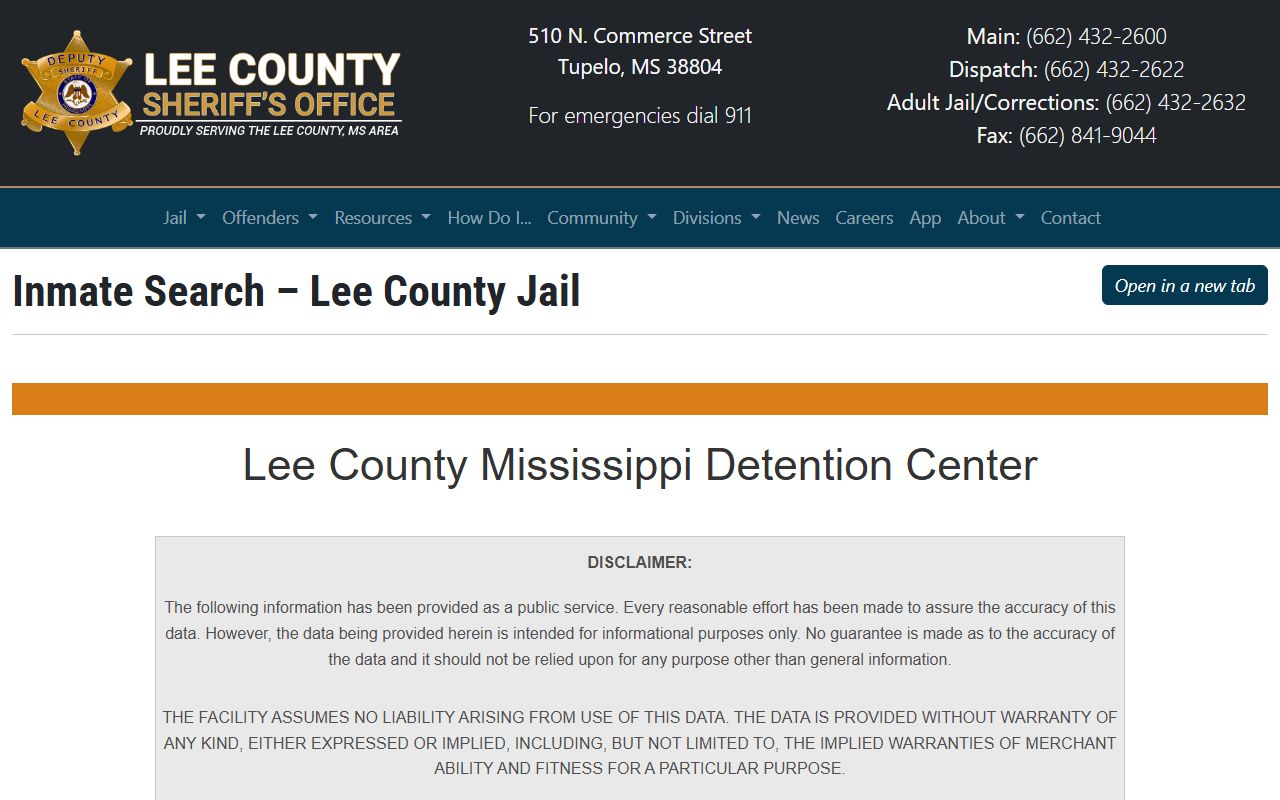
That roster shows who is currently held, who was recently booked, and who was recently released, which is the quickest way to confirm an active arrest. To move from the arrest to the charges, follow the record to the court that holds it.
- Open the Sheriff's inmate search and the county detention center roster for booking and custody detail.
- For the charges, contact the Circuit Clerk at (662) 432-2300 for Circuit, County, and Youth Court cases, or the court that holds a misdemeanor.
- Open the case file and read the list of charges the prosecutor filed.
- Check each charge for its statute code, its level, and its current status.
Statewide records add another layer. Charges that end in a state prison sentence roll up into the Mississippi Department of Corrections system.
Who Files Charges After a Lee County Arrest
An arrest does not set the charges in stone. A prosecutor makes the charging decision after reviewing the arrest and the evidence. Jason D. Herring is the District Attorney for the First Circuit Court District, which covers Lee County along with Alcorn, Itawamba, Monroe, Pontotoc, Prentiss, and Tishomingo Counties. His office prosecutes felony cases brought in Circuit Court and runs a Tupelo office for the district. For misdemeanors, the prosecutor depends on the court. Justice Court, Tupelo Municipal Court, and County Court each handle the lower-level charges filed in their own dockets.
The prosecutor can file the offense an officer listed, change it, add counts, or decline to charge at all. The booking offense and the filed charge are not always the same thing.
Note: The offense listed at booking can differ from the charge a prosecutor files, so the court record controls once a case begins.
How Lee County Charges Get Filed After Arrest
The charge record begins when the prosecutor files a charging document. The document names the offense, cites the statute, and starts the case in court. Mississippi uses three main forms. A complaint or affidavit often starts a misdemeanor or a first appearance. An information is a charge the prosecutor files directly. An indictment is a formal charge returned by a grand jury, which Circuit Court uses for serious felonies. The Circuit Clerk's duties confirm that indictments and pleas are entered in the general court docket.
| Complaint | Information | Indictment | |
|---|---|---|---|
| Filed By | Officer or Prosecutor | Prosecutor | Grand Jury |
| Common For | Misdemeanors | Many felonies | Serious felonies |
| Starts | The case | The case | The case |
| Where It Lands | Justice or Municipal Court | Circuit or County Court | Circuit Court |
Lee County Charge Status and What It Means
Charges rarely stay fixed from arrest to outcome. As a case moves, the prosecutor and the court can change them. A charge may be amended to a different offense, reduced to a lesser one, or added when new facts appear. Some charges are dropped or dismissed before trial. The status on the docket shows where each count stands at that moment. Reading the status matters, because a single arrest can produce several charges that each end differently.
| Status | What It Means |
|---|---|
| Filed | The charge has been entered with the court and the case is now open. |
| Amended / Reduced | The charge has been changed or lowered to a lesser offense. |
| Dropped | The prosecutor has withdrawn the charge before it reaches a verdict. |
| Dismissed | The court has ended the charge, often for lack of evidence or on a motion. |
| Nolle Prosequi | The prosecutor has formally declined to pursue the charge, which ends it without a conviction. |
Lee County Charge Codes and Severity Levels
Each charge points to a Mississippi statute and carries a severity level. Felonies are the most serious and are tried in Circuit Court. Misdemeanors are lower offenses, shared among County, Justice, and Municipal Courts. One arrest can carry several separate charges at once, each with its own code, bond, and possible fine. The Sheriff's roster shows this in a charge table tied to each booking. A sample inmate profile on the county roster lays that charge data out clearly.
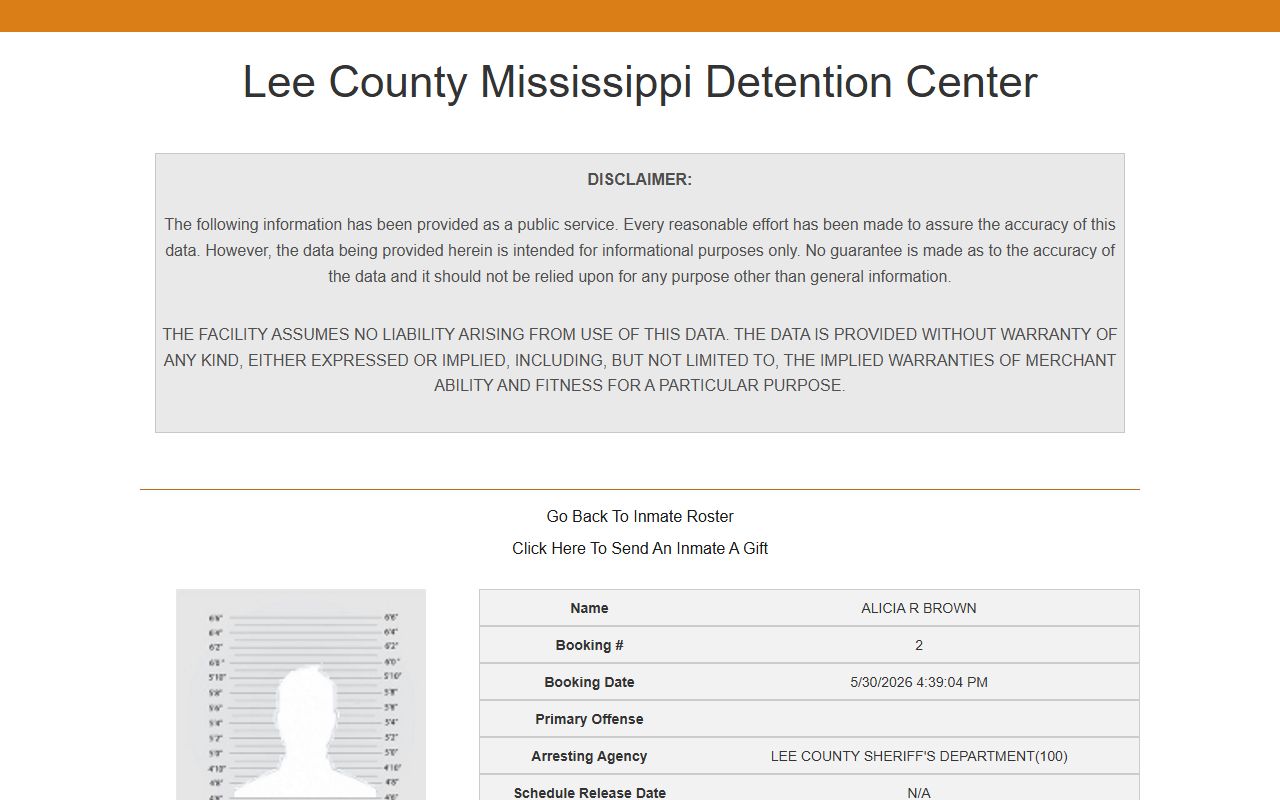
That booking profile pairs the demographics with a charge table, so the same record links a person to each listed offense. The roster charge table tracks four fields for every count.
- Description: the offense listed for the charge.
- Charge Type: the level or class of the offense.
- Bond Amount: the bond set for that charge.
- Fine Amount: any fine attached to the charge.
Charges vs. Convictions in Lee County
Being charged is not the same as being convicted. A charge is an accusation that rests on probable cause. A conviction is the outcome, reached by a guilty plea or a verdict, and it requires proof beyond a reasonable doubt. Both appear in the public record, but they mean very different things. A person can be charged and later cleared, and the charge still shows in the file even when no conviction follows.
| Charge | Conviction | |
|---|---|---|
| Stage | Accusation | Verdict or plea |
| Burden of Proof | Probable cause | Beyond reasonable doubt |
| Public Record | Yes | Yes |
Copies of Lee County Arrest and Release Records
The Sheriff's Office handles copies of arrest and release records for the public. These copies are separate from the court charge file kept by the clerk. The Sheriff's records page lists the available checks, the arrest and release forms, and the fees that apply.
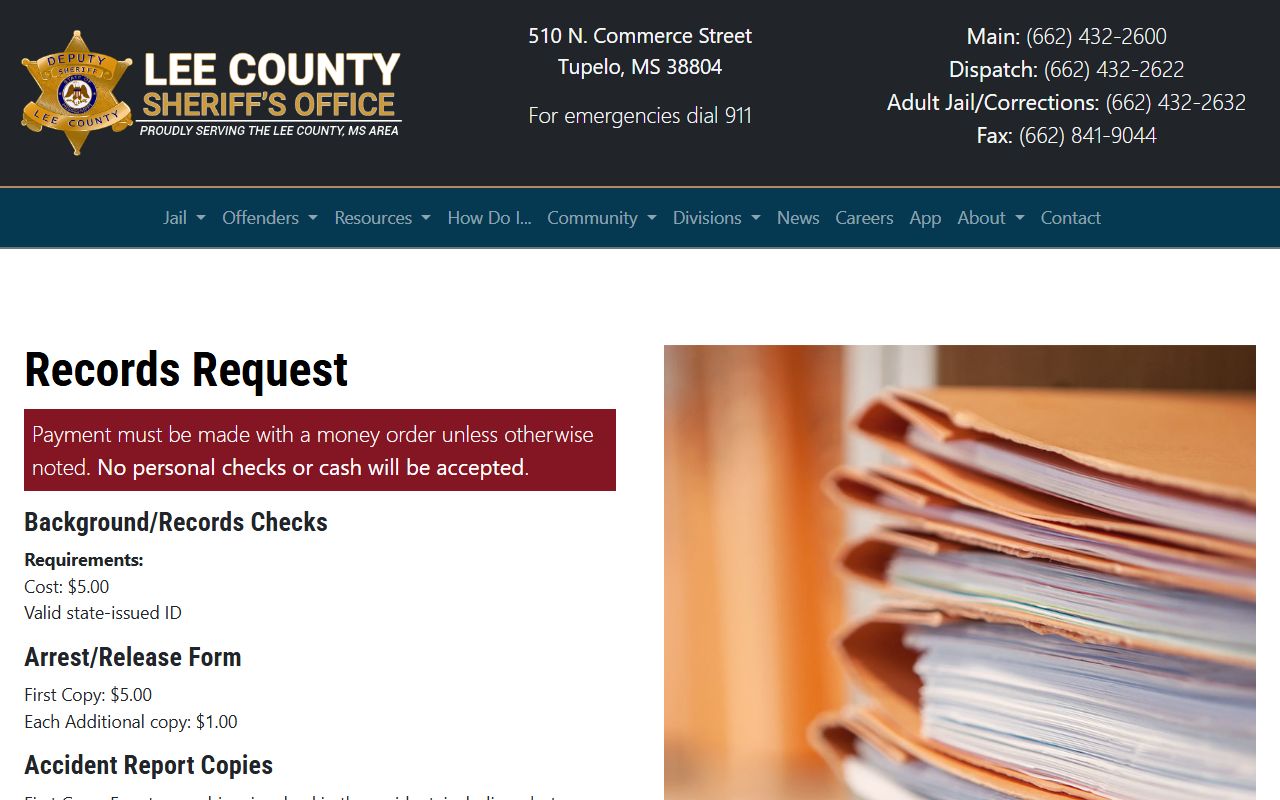
A background or records check runs $5 with a valid state-issued ID, and arrest and release form copies cost $5 for the first copy and $1 for each additional copy. Payment for these records is by money order unless the office notes otherwise. Fingerprints and process service carry their own fees and appointment rules.
Note: Call the Sheriff's Office at (662) 432-2600 before mailing payment, since some records need an appointment or a specific payment method.
Sealed vs. Expunged Charge Records
Some charges leave the public record entirely. Mississippi allows expungement by petition for eligible records under Miss. Code Section 99-19-71. A person files in the court where the charge or conviction occurred, and a judge can order agencies to remove the record if the person qualifies. Eligibility turns on the offense, the sentence, prior history, and waiting periods, and many violent, sex, drug, DUI, and weapons offenses are excluded. Sealing limits public view without destroying the file, while expungement treats the record as if it never existed.
| Sealed | Expunged | |
|---|---|---|
| Visibility | Hidden from public | Destroyed / treated as never existed |
| Law Enforcement | Limited access | Very limited |
| Eligibility | By court order in limited cases | By petition under Miss. Code Section 99-19-71 |
Statewide Charge and Criminal History Lookups
Charges that end in a state prison sentence move beyond the county. The Mississippi Department of Corrections keeps the record for sentenced state inmates. The MDOC inmate search lets the public look up a person by name or by MDOC number.
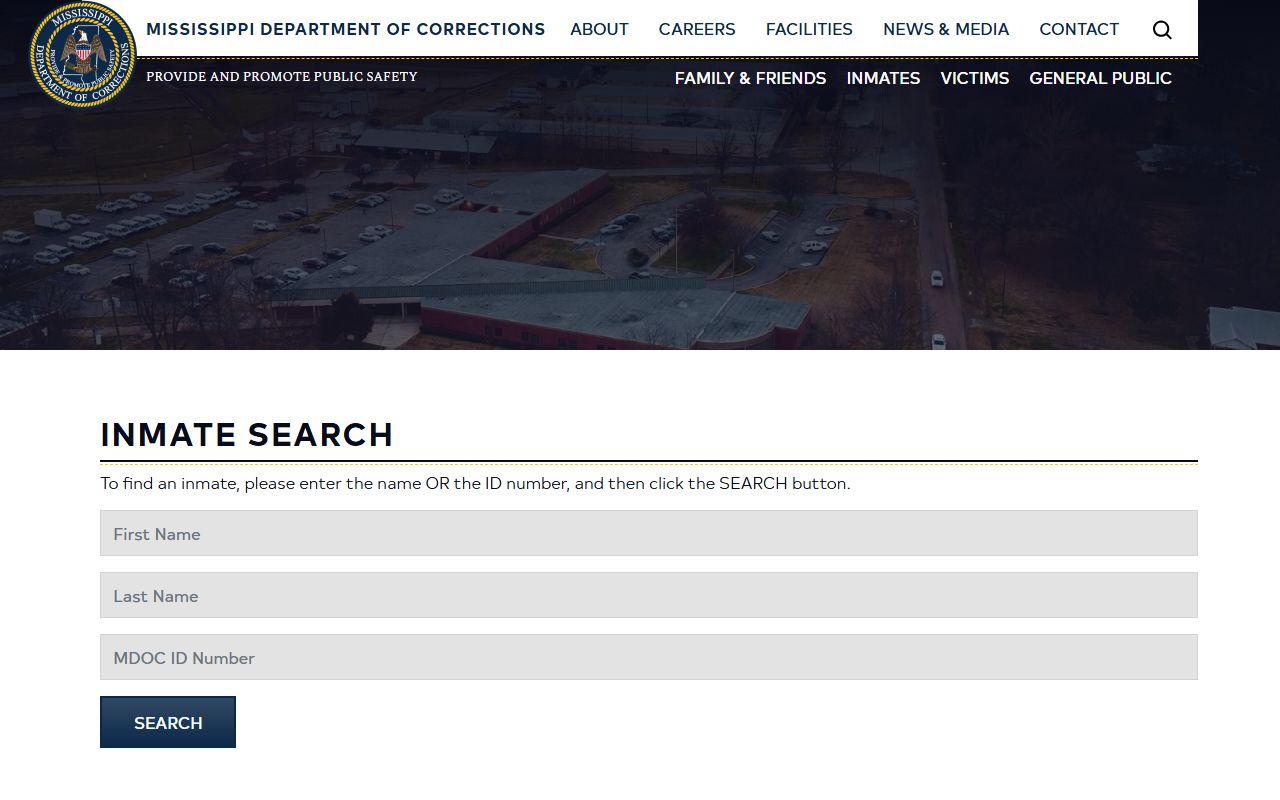
That search covers state prisoners and parolees, not the pretrial detainees held in the county jail, so it complements rather than replaces the local roster. The county jail roster and the state system answer different questions. The roster shows current county custody, while the MDOC search shows people serving state time after a felony conviction.
Background Check Considerations
A casual record lookup and a formal background check are not the same. A regulated background check follows the federal Fair Credit Reporting Act, which sets rules for screening tied to employment, housing, credit, or insurance. A quick search of an arrest record or a charge does not meet that standard. Official county and state sources are the place to verify any charge before acting on it.
Important: This is a privately operated resource and not an FCRA-regulated consumer reporting agency, so its information cannot be used for employment, tenant, credit, or insurance screening.
Restricted Charge Records in Lee County
Not every charge is open to the public. Youth Court records for people under 18 are confidential, and Mississippi law keeps delinquency, abuse, and neglect files closed except for authorized disclosures. Sealed and expunged charges drop out of public view by court order. Charges tied to an open investigation, and personal identifiers such as Social Security numbers, may be withheld or redacted under court rules. For these records, the right step is to contact the court of record or the attorney on the case rather than expect a public lookup.
Adoption and mental-health commitment files held in Chancery Court are also restricted. Those records require court authorization, not the ordinary copy process.