
What Is a Court Docket in Lee County
A docket is the official event log for a case. It lists each filing, hearing, and ruling in the order they happen, with the date attached to every line. In Lee County the Circuit Clerk keeps the general court docket, which records the names and parties in each case, pleas, indictments, records from inferior courts on appeal, and the other papers filed in a suit. The clerk also keeps the court's orders in a minute book and maintains an execution docket for judgment collection. Together these entries form a timeline anyone can follow without reading every page in the file.
The docket is not the same as the full case record. A docket entry might read that a motion was filed or a hearing was set, but the motion itself, the exhibits, and the signed order live in the case file. Think of the docket as the table of contents and the file as the chapters. The terms below come up often when reading any Lee County docket.
- Docket
- The chronological list of events and filings in a case.
- Minute book
- The court's bound record of orders and proceedings entered by the clerk.
- Continuance
- A postponement that moves a hearing or trial to a later date.
- Disposition
- The final outcome of a charge or case, such as a plea, verdict, or dismissal.
How to Look Up Lee County Court Dockets
There is no single free countywide portal that returns every Lee County docket. The search is court specific, so the first move is to match the record to the court that holds it. Circuit, County, and Youth Court dockets begin with the Circuit Clerk. Chancery dockets begin with the Chancery Clerk. Justice Court and Tupelo Municipal Court keep their own calendars. The steps below work for most requests.
- Identify the court level. Felony and large civil cases are Circuit Court; misdemeanors, smaller civil cases, and youth matters are County Court; divorce and estates are Chancery; tickets and small claims are Justice or Municipal Court.
- For Circuit, County, or Youth dockets, contact the Lee County Circuit Clerk at (662) 432-2300, or reach the Circuit Court department at 662-432-2320 and County Court at 662-432-2330.
- For Chancery dockets, call the Chancery Clerk at (662) 432-2100, and use the Chancery Records Online portal for land and property records.
- For traffic and small civil matters, use the Justice Court calendar or the Tupelo Municipal Court search portal, depending on where the citation was issued.
- Review the docket entries by date, then request the underlying documents from the clerk if you need the full filings.
The statewide Mississippi Electronic Courts system, known as MEC, supports electronic filing and case management. Remote public viewing of those records generally depends on PAMEC subscriber access rather than open anonymous search, so the clerk's counter stays the reliable fallback. For a broader look at every record type, the Lee County court records options run alongside the docket calendars.
What a Lee County Docket Entry Shows
Docket fields vary by court, but the Circuit Clerk's own duty list gives the strongest local picture of what gets recorded. Each line ties an event to a date and a case number, and criminal dockets add the charging and plea steps that civil dockets do not. The table pairs the common fields with what each one tells a reader.
| Field | What It Shows |
|---|---|
| Case Number | The clerk's file identifier, required even for mailed Circuit Court fine payments. |
| Court / Division | Whether the case sits in Circuit, County Civil, County Criminal, Youth, Chancery, Justice, or Tupelo Municipal Court. |
| Parties | The names of all parties entered in the general court docket. |
| Plea | The defendant's formal answer to a criminal charge, listed by the clerk. |
| Indictment | The grand jury charging document entered for a felony matter. |
| Order | The judge's written rulings, kept and referenced in the minute book. |
| Appeal Record | Records from Justice, Municipal, or County courts brought up on appeal. |
| Continuance / Hearing Date | When a hearing is set and any postponement that moves it. |
| Disposition | The final outcome of the charge or case. |
| Fine / Cost | Offender name, case number, payment type, and amount owed or paid. |
Circuit Court Dockets and Calendar Limits
Lee County Circuit Court is the trial court of general jurisdiction for felonies, civil cases above the lower court limits, and appeals from County, Justice, Municipal, and administrative tribunals. Its docket runs through the Circuit Clerk and the First Circuit Court Administrator's office. Lee County belongs to the First Circuit Court District, which also serves Alcorn, Itawamba, Monroe, Pontotoc, Prentiss, and Tishomingo Counties, so the district calendar covers more than one county at a time.
The First Circuit Court website does publish a calendar, but it is attorney facing. Access requires a registered username and password, which means the general public cannot open the full court calendar online the way an attorney of record can. The First Circuit Court Administrator page lists the office that manages those settings and the contact details for calendar questions. The screenshot below shows that administrator and calendar information for the district.
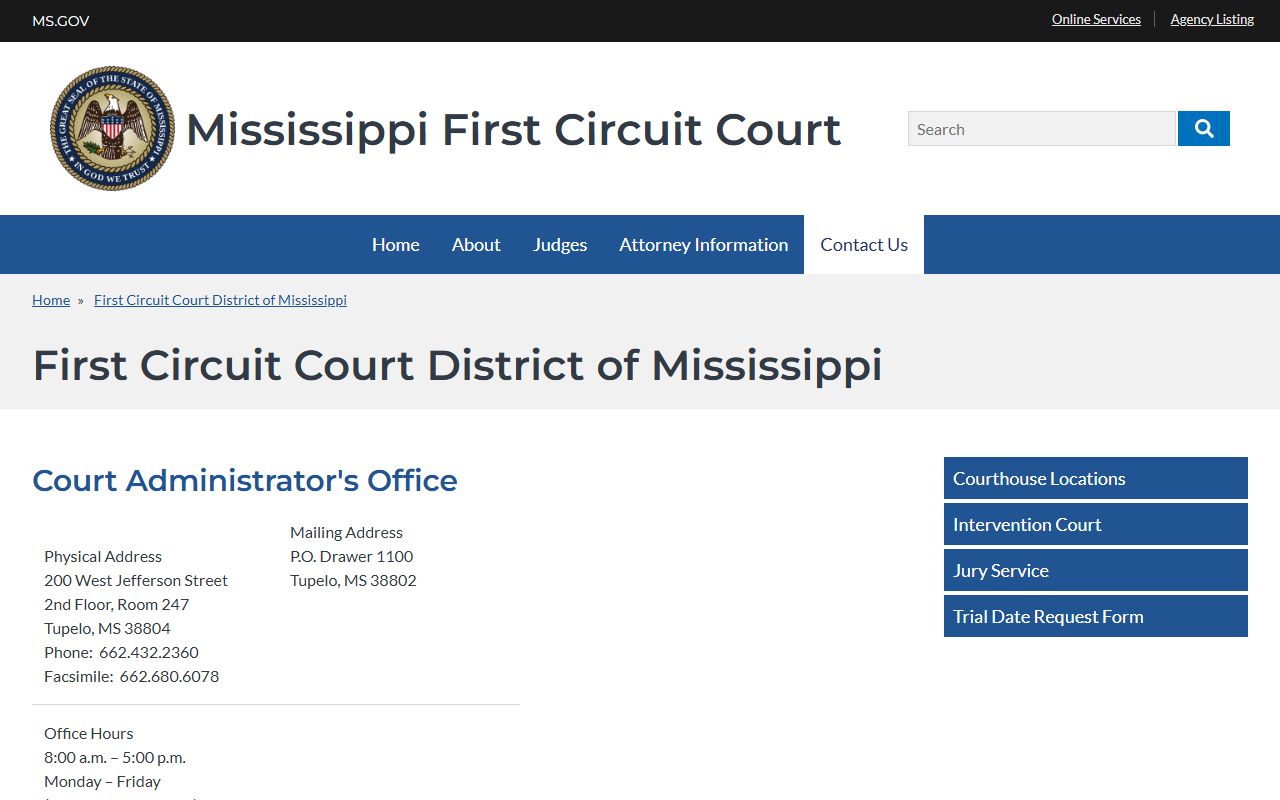
Because the online calendar sits behind a login, the most reliable way for the public to confirm a Circuit Court setting is to call the Circuit Clerk or the Court Administrator. Appeals that move up from the lower courts also appear on the Circuit Court docket once they are filed, so a single name can show on more than one court's calendar as a case travels. The Lee County Circuit Court page covers the judges and divisions in more detail.
County and Youth Court Calendars
Lee County Court adds a trial layer between the lower courts and Circuit Court. It runs three divisions: Civil, Criminal, and Youth Court. The Civil and Criminal divisions handle matters up to $200,000, misdemeanor cases, Domestic Abuse Protection Orders, and appeals from Justice and Municipal Courts. The Youth Court division hears delinquency, abuse, neglect, and child-in-need-of-supervision cases.
The Lee County Court page describes those divisions and notes that its calendar requires a login. The image below shows the County Court divisions and that calendar login note.
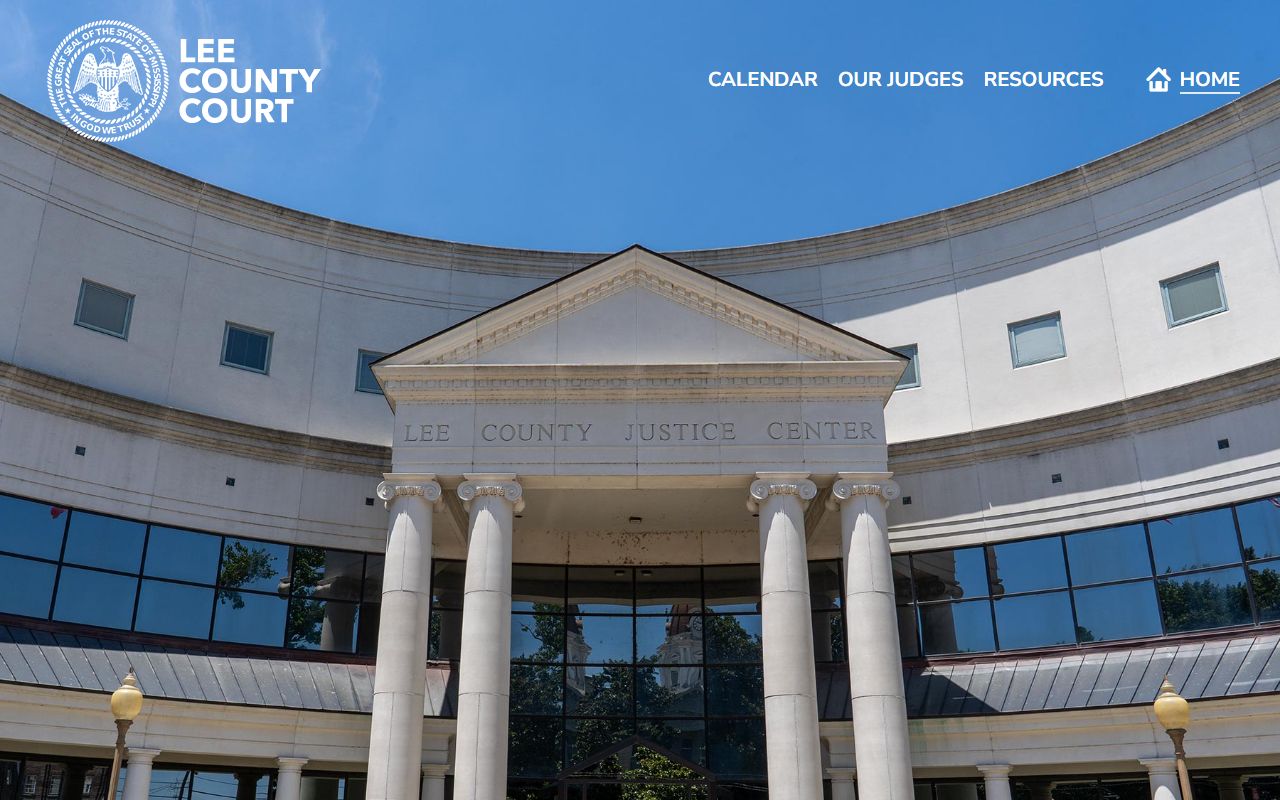
That login requirement matters for anyone expecting an open public docket. Youth Court records carry their own confidentiality rules and are restricted from public lookup, so those matters are not searchable online and require contact with the Youth Court office or an attorney. For County and Youth Court settings, the County Court department and the County and Youth Court Administrator can confirm dates by phone.
Justice and Tupelo Municipal Court Dockets
The lower courts carry the highest volume of everyday cases, and they publish the most accessible calendars. Lee County Justice Court hears traffic tickets, misdemeanors, small civil claims up to $3,500, and evictions. Its court days are fixed: court meets every Tuesday and Thursday, with Civil Court at 9:00 a.m. and Criminal Court at 1:30 p.m. Questions about a court date go to 662-432-2500, and traffic tickets can be paid in person or through the county payment link.
Tupelo Municipal Court handles city citations and ordinance matters, and it posts dockets by category. The Tupelo Municipal Court page links to trial and arraignment dockets so defendants can find their setting before a court date. The image below shows those municipal court docket categories.
Tupelo also runs an online search portal where the public can look up a case by citation number, driver's license, name, vehicle, or business name. That tool serves both payment and docket confirmation for city cases. When a Justice or Municipal case is appealed, it moves up to County or Circuit Court, and the new setting then appears on the higher court's docket.
- Lee County Justice Court: Tuesday and Thursday sessions for traffic, misdemeanors, small civil claims, and evictions.
- Tupelo Municipal Court: trial and arraignment dockets plus a citation, name, and vehicle search portal.
- Chancery Court: divorce, estate, guardianship, and land matters through the Chancery Clerk and the records portal.
Note: Justice Court abstracts of judgment become available only after the 30-day appeal window has run, and the clerk charges a per-case fee for each one.
Docket vs. Full Case Record
Knowing the difference between a docket and a full case record saves time and money. A docket lists what happened and when; the full record holds the documents themselves, including motions, exhibits, signed orders, and the minute book entries. Many readers only need the docket to track a case, while a legal review or an appeal often needs the complete file from the clerk.
| Docket | Full Case Record | |
|---|---|---|
| Format | List of dated entries | Complete filed documents |
| Access | Often by phone or calendar lookup | Counter visit or copy request |
| Cost | Usually free to view | Copy and certification fees apply |
| Use | Track case progress and dates | Legal review and evidence |
Copy fees vary by office. At the Chancery Clerk, copies made by the public run $0.25 per page, staff-made copies run $0.50 per page, and certification adds $1.00 per document. Mailed copy requests must include payment by check or money order, a stamped self-addressed envelope, and enough detail to identify the record.
How to Read a Lee County Docket
Docket lines are short, so they lean on shorthand. A line that names a party with a filing date marks when that paper entered the case. A continuance pushes a hearing to a later date and shows up as a new setting. An order points to a ruling kept in the minute book, and a disposition closes out a charge or the whole case. On criminal dockets, the plea and indictment lines mark the formal charge and answer.
Why does the same person appear on two court dockets? Cases move up on appeal. A Justice or Municipal Court case that is appealed lands on the County or Circuit Court docket, and a Circuit Court appeal moves to the Mississippi Supreme Court. The original docket stays in place while the new court opens its own entries, so one matter can leave a trail across more than one calendar.
When a docket entry is unclear, the clerk's office can explain what a line means, though staff cannot give legal advice. For records that never appear online, such as sealed, adoption, or Youth Court matters, the public records and copy process through the clerk is the correct channel rather than an open docket search.